


The Silent Killer of Septic Lines
Of all the things that can cause a septic emergency, tree roots are the most insidious. They work slowly, silently, and underground, causing no symptoms for years—until the day your plumbing completely stops.
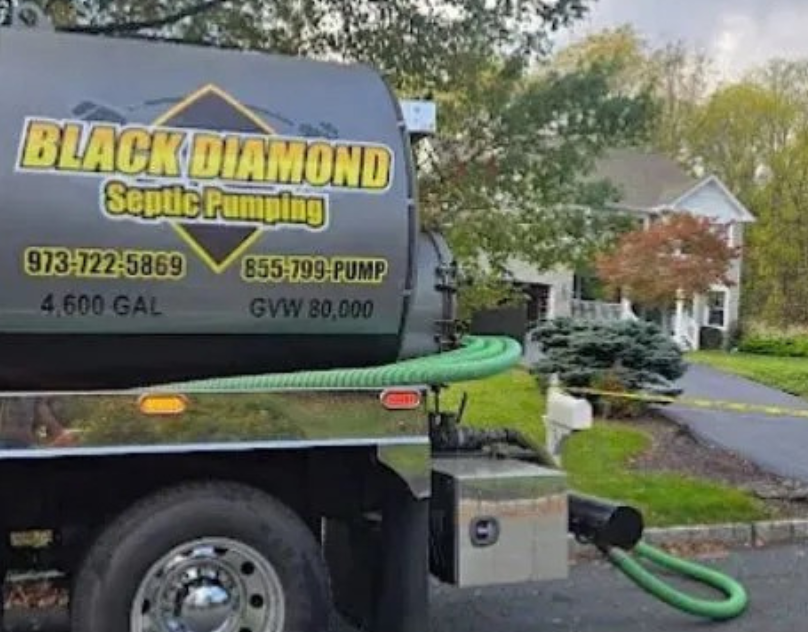
Root intrusion is one of the top reasons homeowners call Black Diamond Septic Pumping for emergency service. Unlike a simple clog from toilet paper, a root blockage is structural and requires specialized heavy-duty equipment to clear.
Why Roots Target Septic Systems
To a tree, your septic system is an oasis. Roots are biologically programmed to seek out three things: water, oxygen, and nutrients. Your septic pipes and tank contain all three in abundance.
Septic wastewater is warm and nutrient-rich (essentially fertilizer). Even the tiniest crack in a clay or concrete pipe, or a loose seal on a PVC joint, releases water vapor into the surrounding soil. Tree roots detect this vapor and grow toward the source.
Once a microscopic hair-like root finds the opening, it enters the pipe. Inside, it finds the perfect environment to thrive. The root grows rapidly, expanding in diameter and sending out a web of smaller feeder roots. This mass acts like a net, catching toilet paper, grease, and solids until the pipe is 100% blocked.
Signs of Root Intrusion
Root clogs behave differently than soft clogs.
- Slow-Growing Problems: You might notice your drains getting slower over the course of a few months.
- Gurgling in the Toilet: This indicates airflow is restricted in the pipes.
- Recurring Clogs: You plunge the toilet, and it works for a day, then clogs again. This is because you are pushing water past the root mass, but the mass itself remains.
- Green Patches: You may see exceptionally green, fast-growing grass above the path of your sewer line, indicating leakage.
The Emergency Fix: Hydro-Jetting and Snaking
When you call us for a "24/7 septic pumping near me" request and we suspect roots, a standard pump-out won't fix the issue. We need to clear the line.
- Mechanical Snaking: We use a heavy-duty auger with a cutting head. This spinning blade goes down the pipe and physically cuts the roots out.
- Hydro-Jetting: For more severe infestations, we use high-pressure water jets (up to 4,000 PSI). This blasts the roots away and scours the inside of the pipe to remove the "gum" and debris that roots have trapped.
Prevention and Landscaping
Once we clear the emergency blockage, you need to prevent it from coming back.
- Know Where Your Lines Are: Before planting any trees, know exactly where your tank and drain field are located.
- Safe Distances: As a general rule, trees should be planted at least as far away from the septic system as their estimated mature height. For example, if a maple tree grows 50 feet tall, keep it 50 feet away from your drain field.
- Avoid "Thirsty" Trees: Some trees are more aggressive than others. Willow trees, poplars, maples, and elms have invasive root systems that can travel over 100 feet to find water. Stick to shallow-rooted plants like grass or small perennials near the system.
Conclusion Roots are nature’s plumbing destroyers. If you have large trees near your septic system and are experiencing slow drains, don't wait for a total blockage. Call Black Diamond Septic Pumping to inspect your lines and clear the intrusion before it crushes your pipes

 English
 Arabic
 French
 Spanish
 Portuguese
 Deutsch
 Dutch
Dutch
 Italiano
 Russian
 Romaian
 Portuguese (Brazil)
 Greek
Greek