


What Makes RWA Token Development the Missing Link Between TradFi and DeFi?
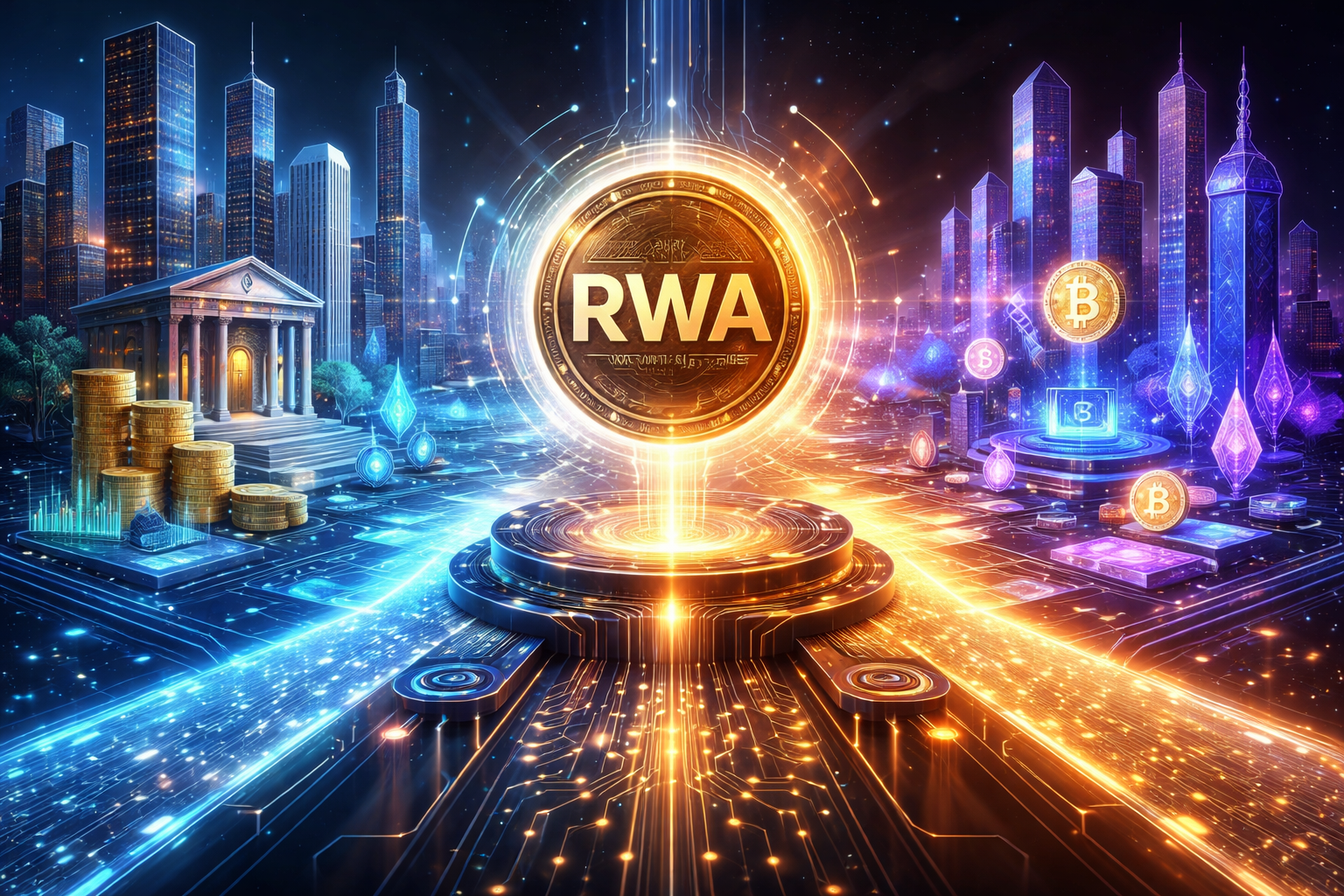
Global finance is standing at a rare intersection where decades old financial infrastructure is colliding with programmable, decentralized networks. Traditional finance, commonly referred to as TradFi, still controls the majority of the world’s capital, yet it remains slow, opaque, and operationally complex. Decentralized finance, or DeFi, offers speed, transparency, and automation but struggles with volatility, trust, and real world relevance. The gap between these two systems has limited the true transformation of global finance.
This is where RWA token development emerges as a critical missing link. By enabling real world assets to exist and operate on blockchain networks, RWA token development bridges institutional capital with decentralized efficiency. It connects regulated assets with programmable finance, unlocking liquidity, accessibility, and global participation without dismantling existing financial structures.
This article explores in depth why RWA token development is becoming the most important convergence layer between TradFi and DeFi, and how it is reshaping the future of capital markets.
Understanding the Structural Divide Between TradFi and DeFi
The operational rigidity of traditional finance
Traditional finance has been built on centralized intermediaries, fragmented systems, and manual reconciliation processes. Banks, clearing houses, custodians, and regulators all operate in silos, resulting in slow settlement cycles, high transaction costs, and limited transparency. Even with digitization, many core systems still rely on outdated infrastructure that struggles to scale efficiently across borders.
From asset issuance to settlement, every step in TradFi introduces friction. Capital remains locked for days, sometimes weeks, before final settlement. Access is restricted to accredited participants, and transparency is limited to internal reporting structures. These inefficiencies prevent capital from moving freely and reduce overall market velocity.
The innovation constraints of decentralized finance
DeFi, on the other hand, offers real time settlement, automated smart contracts, and permissionless access. However, most DeFi protocols rely heavily on crypto native assets that lack intrinsic real world value. Price volatility, regulatory uncertainty, and limited institutional trust prevent large scale capital deployment.
While DeFi has proven its technical capabilities, it lacks stable, yield generating assets that institutions are comfortable deploying capital into. Without real world collateral, DeFi remains largely disconnected from the trillions of dollars locked in traditional markets.
Why Real World Assets Are Essential to Financial Convergence
Real world assets as a foundation of global wealth
Real world assets such as real estate, commodities, bonds, invoices, and private equity represent the backbone of global wealth. These assets generate predictable cash flows, are governed by legal frameworks, and are widely understood by institutional investors.
Despite their importance, real world assets remain illiquid, difficult to fractionalize, and expensive to trade. Access is often limited by geography, minimum investment thresholds, and regulatory barriers. These constraints keep large portions of global capital underutilized.
Tokenization as a financial abstraction layer
RWA token development introduces a digital abstraction layer that allows physical and financial assets to be represented as blockchain tokens. These tokens encapsulate ownership rights, cash flow entitlements, and compliance logic in a programmable format.
By tokenizing real world assets, financial instruments become divisible, transferable, and interoperable with decentralized applications. This abstraction does not replace legal ownership but mirrors it on chain, creating a synchronized relationship between off chain assets and on chain liquidity.
How RWA Token Development Bridges TradFi and DeFi
Point 1: Creating trust through asset backed tokens
Trust is the primary barrier preventing institutional capital from entering DeFi. RWA token development addresses this by anchoring tokens to legally recognized assets. Each token represents a verifiable claim on an underlying asset, reducing speculation and increasing confidence.
Institutional investors can evaluate tokenized assets using familiar financial models while benefiting from blockchain transparency. This trust bridge allows capital to move into decentralized environments without abandoning traditional risk frameworks.
Point 2: Enabling regulatory alignment without sacrificing decentralization
One of the most powerful aspects of RWA token development is its ability to embed compliance directly into smart contracts. Know your customer checks, investor eligibility, transfer restrictions, and jurisdictional rules can be enforced programmatically.
This approach allows TradFi institutions to meet regulatory obligations while participating in decentralized ecosystems. Rather than resisting regulation, RWA token development integrates it seamlessly into token logic, creating compliant DeFi environments that regulators can understand and supervise.
Point 3: Unlocking liquidity for traditionally illiquid assets
Many high value assets suffer from limited liquidity due to long holding periods and high entry costs. RWA token development enables fractional ownership, allowing assets to be divided into smaller units that can be traded more efficiently.
This fractionalization lowers barriers to entry, increases market participation, and enhances price discovery. Liquidity that was once locked for years can now circulate dynamically across global markets.
Point 4: Automating financial operations with smart contracts
Traditional asset management relies heavily on intermediaries to manage distributions, settlements, and reporting. RWA token development replaces many of these manual processes with smart contract automation.
Interest payments, rental income, dividends, and principal repayments can be distributed automatically based on predefined rules. This reduces operational risk, lowers costs, and ensures real time transparency for all participants.
The Role of RWA Token Development in Institutional DeFi Adoption
Lowering operational friction for financial institutions
Banks and asset managers operate within strict risk management frameworks. RWA token development allows them to experiment with blockchain technology without abandoning existing asset classes or compliance standards.
Tokenized assets can integrate with internal systems through APIs, enabling institutions to adopt decentralized infrastructure incrementally. This gradual transition reduces operational risk and accelerates adoption.
Providing yield stability for DeFi ecosystems
DeFi protocols often struggle with unsustainable yields driven by token incentives rather than real economic activity. RWA token development introduces stable, cash flow generating assets into these ecosystems.
By backing DeFi lending, borrowing, and liquidity pools with real world collateral, protocols can offer more predictable returns. This stability attracts long term capital and reduces systemic volatility.
Expanding Global Access Through Tokenized Assets
Democratizing investment opportunities
RWA token development enables global investors to access asset classes that were previously restricted to institutions or high net worth individuals. Fractional ownership allows smaller investors to participate in real estate, private credit, and infrastructure projects.
This democratization promotes financial inclusion and distributes economic opportunities more equitably across regions.
Enabling cross border capital flows
Traditional cross border investments involve complex legal structures, currency conversions, and settlement delays. Tokenized assets can be transferred globally within minutes while maintaining compliance controls.
This efficiency enhances capital mobility and supports emerging markets by connecting them directly with global liquidity.
Security and Transparency as Core Advantages
Immutable record keeping
Blockchain ledgers provide immutable records of ownership, transactions, and asset history. This transparency reduces fraud, improves auditability, and increases investor confidence.
For TradFi participants, this represents a significant upgrade over fragmented reporting systems and manual reconciliations.
Reduced counterparty risk
Smart contracts execute automatically based on predefined conditions, reducing reliance on intermediaries. This minimizes counterparty risk and ensures that transactions settle as intended.
RWA token development transforms trust from institutional reliance to cryptographic certainty.
Challenges That RWA Token Development Is Solving Gradually
Asset verification and custody
Ensuring that tokenized assets are properly verified and securely custodied remains a challenge. RWA token development frameworks increasingly integrate trusted custodians, legal agreements, and audit mechanisms to strengthen asset backing.
Legal enforceability
Bridging on chain tokens with off chain legal systems requires carefully structured contracts. The industry is rapidly developing standardized legal models that align token ownership with enforceable rights.
These advancements are making tokenized assets more acceptable to regulators and institutions alike.
Why RWA Token Development Is Not a Trend but an Infrastructure Shift
A foundational layer for future finance
Unlike speculative crypto innovations, RWA token development addresses fundamental inefficiencies in global finance. It enhances liquidity, transparency, and accessibility without dismantling existing systems.
This makes it an infrastructure level innovation rather than a temporary trend.
Alignment of incentives across ecosystems
RWA token development aligns the incentives of TradFi institutions, DeFi protocols, regulators, and investors. Each participant benefits from improved efficiency, reduced risk, and expanded market access.
This alignment creates a sustainable growth model for decentralized finance.
The Long Term Impact on Capital Markets
Reimagining asset issuance and trading
Tokenized assets enable continuous markets that operate around the clock. Issuance becomes faster, trading becomes more efficient, and settlement becomes near instantaneous.
This reimagining of market structure will gradually replace legacy processes with programmable alternatives.
Accelerating financial innovation
By providing a bridge between real world assets and decentralized protocols, RWA token development unlocks new financial products. Structured finance, automated derivatives, and on chain funds become easier to build and manage.
Innovation accelerates when infrastructure friction is removed.
Conclusion: The Missing Link Is Now Taking Shape
RWA token development is not attempting to replace traditional finance or dominate decentralized finance. Instead, it harmonizes the strengths of both systems. TradFi brings trust, scale, and regulatory clarity. DeFi brings speed, transparency, and programmability.
By tokenizing real world assets, RWA token development creates a shared language that both ecosystems can understand and leverage. It transforms static assets into dynamic financial instruments and unlocks global liquidity without sacrificing compliance or security.
As adoption accelerates, RWA token development will increasingly define how capital moves, how assets are managed, and how financial systems interact. The missing link between TradFi and DeFi is no longer theoretical. It is actively being built, one tokenized asset at a time.

 English
 French
 Spanish
 Portuguese
 Deutsch
 Turkish
 Dutch
Dutch
 Italiano
 Russian
 Romaian
 Portuguese (Brazil)
 Greek
Greek