


Opportunities and Forecast for the EV Contactor Market
Introduction
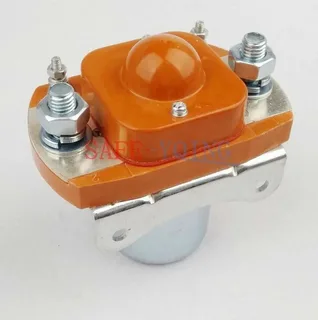
The electric vehicle contactor market is a crucial segment of the global electric mobility and power electronics industry, responsible for ensuring safe and reliable control of high-voltage electrical circuits within electric vehicles. Contactors act as electrically controlled switches that manage the connection and disconnection of high-voltage battery packs to inverters, motors, and auxiliary systems. As electric vehicles operate at significantly higher voltages than conventional automobiles, robust and high-performance contactors are essential for preventing electrical faults, short circuits, and thermal damage. With the accelerating global adoption of battery electric vehicles, plug-in hybrids, electric buses, and commercial electric fleets, the demand for high-reliability contactors is growing rapidly. Governments worldwide are promoting electric mobility through emission regulations, subsidies, and charging infrastructure development, making the EV contactor a foundational component of modern electric powertrain architecture and vehicle safety systems.
Market Drivers
The primary driver of the electric vehicle contactor market is the rapid growth in global electric vehicle production and sales. Rising environmental awareness, stringent emission regulations, and government incentives are accelerating the transition from internal combustion engines to electric mobility across passenger and commercial segments. The increasing deployment of high-voltage battery systems, often operating at 400V and 800V levels, requires advanced contactors capable of handling high currents with minimal arcing and energy loss. Expansion of electric buses, delivery vans, and two-wheelers for urban mobility is further boosting demand for compact and durable contactors. Continuous advancements in battery technology, power electronics, and fast-charging systems are increasing the voltage and current handling requirements, directly driving the need for upgraded contactor designs. Additionally, the rising focus on vehicle safety standards and functional safety compliance is compelling automakers to integrate redundant and fail-safe contactor systems. Growth in electric vehicle charging infrastructure and onboard charging systems is also indirectly supporting market expansion, as contactors are used across multiple EV subsystems.
Market Challenges
Despite strong growth prospects, the electric vehicle contactor market faces several technical and commercial challenges. Designing contactors that can withstand extremely high currents, frequent switching, and harsh thermal conditions without performance degradation requires advanced materials and precision manufacturing, increasing production costs. Contact erosion, welding, and arc suppression remain major reliability concerns, particularly in high-voltage fast-charging environments. The market is highly price-sensitive, especially in mass-market electric vehicles, putting pressure on suppliers to deliver cost-effective solutions without compromising safety and durability. Supply chain volatility for copper, silver alloys, and specialty plastics impacts manufacturing costs and lead times. Rapid technological upgrades in EV architectures also shorten product life cycles, requiring continuous investments in research and development. Additionally, compliance with multiple international automotive safety and electrical standards increases certification time and development complexity. For new entrants, long qualification cycles with automotive OEMs present significant barriers to market entry.
Market Opportunities
The electric vehicle contactor market offers significant growth opportunities driven by next-generation vehicle platforms and powertrain electrification across transportation sectors. The shift toward 800V electrical architectures in premium and performance electric vehicles is creating demand for advanced high-voltage DC contactors with superior arc suppression and thermal management. Growing adoption of electric trucks, buses, construction equipment, and off-highway electric vehicles is expanding the addressable market beyond passenger vehicles. The rise of solid-state battery systems and higher energy density lithium-ion batteries will further increase the need for ultra-reliable switching components. Emerging markets in Asia-Pacific, Latin America, and Africa offer strong untapped potential as electric mobility infrastructure and vehicle manufacturing expand. Integration of smart contactors with embedded sensors for temperature, voltage, and current monitoring is creating new opportunities in predictive maintenance and functional safety systems. In addition, increasing investment in battery swapping stations and ultra-fast charging networks will drive demand for heavy-duty contactors capable of repetitive high-load switching operations.
Regional Insights
Asia-Pacific dominates the electric vehicle contactor market due to its massive electric vehicle production base, strong battery manufacturing ecosystem, and aggressive government support for electric mobility. China leads the global market with large-scale deployment of electric passenger vehicles, buses, and two-wheelers, supported by a robust domestic supply chain for EV components. Japan and South Korea also contribute significantly through advanced automotive electronics and battery technologies. Europe represents a major market driven by strict carbon emission targets, rapid electrification of vehicle fleets, and strong presence of global automotive OEMs in Germany, France, and the Nordic countries. North America is witnessing steady growth led by rising adoption of electric pickup trucks, commercial electric fleets, and investments in domestic battery manufacturing across the United States and Canada. Latin America is an emerging market supported by gradual EV adoption in Brazil, Mexico, and Chile. The Middle East & Africa region is at an early stage but shows future potential through government-led clean mobility initiatives and public transport electrification projects.
Future Outlook
The future of the electric vehicle contactor market will be shaped by continuous advancements in high-voltage vehicle architectures, battery technology, and power electronics integration. Contactors will evolve toward higher efficiency, faster response time, and enhanced safety under extreme operating conditions. Solid-state switching technologies may partially complement mechanical contactors in specific applications, but electromechanical contactors will remain dominant for primary battery isolation due to their robustness and proven reliability. Increasing adoption of autonomous and connected electric vehicles will require highly reliable power control systems with built-in diagnostics and fail-safe mechanisms. The expansion of ultra-fast charging infrastructure and megawatt charging systems for heavy-duty vehicles will drive demand for next-generation high-current contactors. Sustainability initiatives will also influence material selection and manufacturing processes to reduce environmental impact. Over the long term, the electric vehicle contactor market is expected to grow in tandem with the global electrification of transportation and energy systems.
Conclusion
The electric vehicle contactor market is a foundational element of the electric mobility ecosystem, enabling safe, efficient, and reliable control of high-voltage power flows within modern electric vehicles. Market growth is being driven by rapid expansion of electric vehicle production, advancements in battery and charging technologies, and increasingly stringent vehicle safety standards worldwide. While challenges related to cost pressure, material reliability, certification complexity, and fast-evolving EV architectures persist, continuous technological innovation and expanding application areas are strengthening long-term market prospects. Asia-Pacific remains the dominant production and consumption hub, while Europe and North America lead in technology adoption and regulatory-driven electrification. As the global transportation sector accelerates toward full electrification, electric vehicle contactors will remain an indispensable component ensuring operational safety and power system integrity across all categories of electric mobility.

 English
 Arabic
 French
 Portuguese
 Deutsch
 Turkish
 Dutch
Dutch
 Italiano
 Russian
 Romaian
 Portuguese (Brazil)
 Greek
Greek