


Key Performance Metrics for High-Quality TPU Membranes
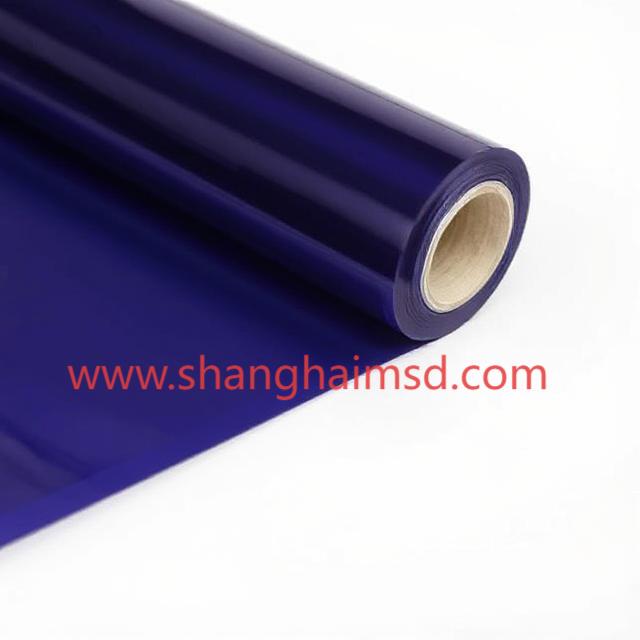
As modern industries demand materials capable of maintaining reliability under rigorous mechanical and environmental conditions, engineered membranes such as TPU Compound Film have become increasingly important across product development and manufacturing. Their functional versatility depends not only on molecular structure but also on the precise evaluation of how these materials perform under controlled testing methods. Shanghai MSD supports global manufacturers by providing customized composite films engineered to meet specific certification, durability, and performance standards established across multiple industries.
Mechanical strength testing plays a critical role in determining how TPU composite membranes perform in both static and dynamic environments. Tensile strength evaluations measure how the membrane stretches before breaking, which is crucial for components used in inflatables, structural layers, and engineered fabrics. Equally important is elongation testing, which indicates how well the membrane maintains elasticity without permanent deformation. In many applications — from medical bladders to outdoor apparel — durability relies on a balance between flexibility and resistance to permanent stretching. Shanghai MSD collaborates with testing laboratories and clients to ensure tensile performance matches the operational requirements of each end-use product.
Abrasion resistance is another essential parameter, particularly for TPU composite applications in outdoor, industrial, and transportation sectors. Standardized abrasion tests simulate repeated surface friction to evaluate how the membrane withstands long-cycle wear and contact with rough surfaces. TPU composite membranes benefit from inherent toughness, yet surface coatings or multilayer structures can be added to increase resistance for high-stress applications such as protective equipment and technical mountaineering gear. Shanghai MSD provides various finishing options that enhance abrasion longevity without sacrificing softness or ease of processing.
Thermal performance testing ensures TPU composite membranes remain stable in both high- and low-temperature environments. Differential scanning calorimetry (DSC) tracks heat flow to determine the melting point, crystallization behavior, and thermal transitions of TPU composites. These measurements are essential for applications that face temperature fluctuations, such as vehicle interiors, medical devices, or electronics housings. Low-temperature flexibility testing evaluates whether TPU maintains elasticity when exposed to cold climates. Shanghai MSD offers TPU composites designed to withstand these conditions, supporting clients in industries that operate across varied global climates.
Puncture resistance and tear strength testing are equally vital for applications requiring structural integrity under direct mechanical impacts. Puncture tests evaluate how much force is required for an object to pierce the membrane, while tear testing examines crack propagation once a slit or opening is introduced. These evaluations are particularly relevant for inflatables, protective covers, and pressurized structures. By working closely with Shanghai MSD, manufacturers can select composite configurations optimized for impact-prone environments, ensuring that membranes maintain reliability during unexpected mechanical stress.
Chemical resistance testing identifies how TPU composite membranes respond to exposure to oils, fuels, cleaning agents, and industrial chemicals. Different TPU formulations exhibit varying tolerance levels depending on hardness, molecular weight, and composite layer design. For sectors such as logistics, automotive, and industrial containment, membranes must maintain dimensional stability and mechanical strength in the presence of aggressive substances. Shanghai MSD analyzes end-use exposure scenarios and provides TPU film solutions tailored to withstand specific chemical environments while maintaining consistent physical properties.
Water vapor transmission rate (WVTR) and oxygen permeability testing are critical for applications requiring controlled breathability or barrier performance. WVTR testing quantifies how effectively the membrane allows moisture vapor to pass through, which is essential for wearable gear, medical dressings, and temperature-regulated enclosures. Oxygen permeability measurements ensure that certain products — particularly food packaging and technical inflatables — maintain airtight integrity to prevent contamination or pressure loss. Shanghai MSD assists manufacturers in adapting barrier levels to meet specialized performance needs.
Adhesion strength testing becomes relevant when TPU composite membranes are laminated with textiles, foams, or engineered substrates. Peel-strength tests measure how effectively the membrane bonds to its partner material under controlled force. Since TPU supports multiple bonding methods — including heat-lamination, solvent bonding, and ultrasonic welding — testing ensures compatibility between materials and long-term structural retention during real-world use. Shanghai MSD provides technical guidance for integrating TPU membranes into multi-layer assemblies, ensuring stable adhesion performance across diverse manufacturing processes.
Across all these performance evaluations, the testing protocols ensure TPU composite membranes meet rigorous industry expectations and remain dependable across demanding environments. Manufacturers seeking deeper technical insights and application-specific membrane configurations can learn more at:
https://www.shanghaimsd.com/news/the-composition-and-versatility-of-tpu-compound-film.html .

 English
 Arabic
 French
 Spanish
 Portuguese
 Deutsch
 Turkish
 Dutch
Dutch
 Russian
 Romaian
 Portuguese (Brazil)
 Greek
Greek