


Fiber Laser Welding for High-Precision Industrial Metal Joining Solutions
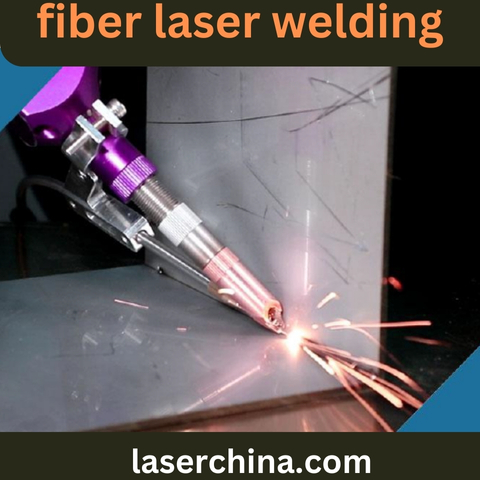
Fiber laser welding has become a defining technology in modern industrial manufacturing, shaping how metals are joined with precision, consistency, and visual excellence. This advanced welding method is widely adopted across industries that demand high-quality seams, refined aesthetics, and repeatable results in both large-scale production and specialized fabrication environments. By focusing on controlled laser energy delivered through optical fiber, this welding approach aligns seamlessly with today’s emphasis on accuracy, automation compatibility, and premium workmanship.
At its core, fiber laser welding relies on a highly concentrated laser beam transmitted through flexible optical fibers. This allows manufacturers to guide energy directly to the welding zone with remarkable stability. The process supports clean, narrow weld seams that meet strict dimensional and aesthetic requirements. In sectors where tolerance margins are minimal and appearance matters as much as strength, fiber laser welding has become a preferred choice for metal joining tasks.
The technology is deeply integrated into industries such as automotive manufacturing, aerospace engineering, medical device production, electronics assembly, metal furniture fabrication, and precision tooling. In automotive production lines, fiber laser welding is commonly applied for body-in-white assemblies, battery enclosures, exhaust components, and structural reinforcements. The consistency of the welds contributes to uniformity across thousands of parts, supporting streamlined quality control processes.
In aerospace and aviation environments, where material integrity and repeatability are essential, fiber laser welding supports the joining of lightweight alloys and high-performance metals. Manufacturers utilize it to achieve clean seams that comply with strict regulatory and engineering standards. The ability to manage heat input precisely is especially valued when working with thin or sensitive materials that require refined control during welding operations.
Medical and healthcare manufacturing has also embraced fiber laser welding for producing surgical instruments, implants, and medical equipment housings. These applications require exceptional cleanliness, fine seam control, and compatibility with stainless steel and other biocompatible metals. The process allows manufacturers to maintain tight tolerances while producing visually smooth welds suitable for hygienic environments.
Another area where fiber laser welding continues to gain attention is the electronics and electrical equipment industry. Components such as battery tabs, connectors, enclosures, and sensor housings often involve small-scale welding tasks that demand high accuracy. The focused laser beam allows manufacturers to join delicate parts without excessive thermal influence on surrounding areas, supporting stable electrical performance and compact product design.
From a production workflow perspective, fiber laser welding integrates well with automated systems and robotic platforms. Its compatibility with CNC-controlled motion systems makes it ideal for smart factories and digitally managed manufacturing lines. Robotic fiber laser welding cells are increasingly common in facilities that prioritize repeatability, reduced manual intervention, and consistent output quality across multiple shifts.
Material versatility is another defining aspect of fiber laser welding. It is widely used for carbon steel, stainless steel, aluminum, copper alloys, and various specialty metals. This adaptability allows manufacturers to use a single welding platform across different product lines, supporting flexible production strategies and efficient workshop layouts. The process is frequently applied to thin sheets, medium-thickness plates, and complex geometries that require precise seam placement.
In custom fabrication and metal artistry, fiber laser welding has opened new creative possibilities. Designers and fabricators can produce smooth, visually refined welds that blend seamlessly with the base material. This is particularly valuable in architectural metalwork, decorative panels, premium furniture frames, and high-end consumer products where surface finish plays a key role in perceived quality.
The rise of electric vehicles has further accelerated interest in fiber laser welding. Battery modules, power electronics housings, and lightweight structural components rely on accurate and consistent welding methods. Fiber laser welding supports the joining of aluminum and copper elements commonly found in EV systems, aligning with the industry’s focus on compact design and efficient assembly processes.
In heavy equipment manufacturing, the technology supports the production of components that require clean seams and controlled weld profiles. Machinery frames, hydraulic components, and precision assemblies benefit from the predictable welding behavior offered by fiber laser systems. This contributes to uniform production standards across different batches and manufacturing locations.
Training and workforce development around fiber laser welding have also expanded. Technical institutes and industrial training centers include this technology in their programs to prepare operators and engineers for modern production environments. Understanding laser parameters, material interaction, and process control has become an essential skill set in advanced metalworking facilities.
From a business perspective, fiber laser welding represents a strong alignment with modern manufacturing values. Companies adopting this technology often emphasize precision engineering, premium quality standards, and forward-looking production capabilities in their branding and market positioning. The clean and refined appearance of laser-welded products reinforces a professional image that appeals to global clients and partners.
In research and development settings, fiber laser welding supports experimentation with new materials, joint designs, and assembly techniques. Engineers can test prototypes with high accuracy, enabling faster iteration cycles and refined product development. This makes the technology valuable not only in mass production but also in innovation-focused environments.
As global manufacturing continues to evolve, fiber laser welding remains closely linked with automation, digital control, and smart production systems. Its presence in Industry 4.0 frameworks highlights its role in data-driven manufacturing, where welding parameters, seam quality, and production metrics are monitored and optimized in real time.
The continued expansion of fiber laser welding across industries reflects its relevance in both current and future manufacturing landscapes. From precision components to large assemblies, from automated production lines to specialized fabrication workshops, this welding method supports a wide spectrum of applications. Its growing adoption underscores a commitment to refined metal joining solutions that meet the expectations of modern engineering, design, and industrial performance.

 English
 Arabic
 French
 Spanish
 Portuguese
 Deutsch
 Turkish
 Italiano
 Russian
 Romaian
 Portuguese (Brazil)
 Greek
Greek