


Folding Utility Knife Locks: A Short Guide
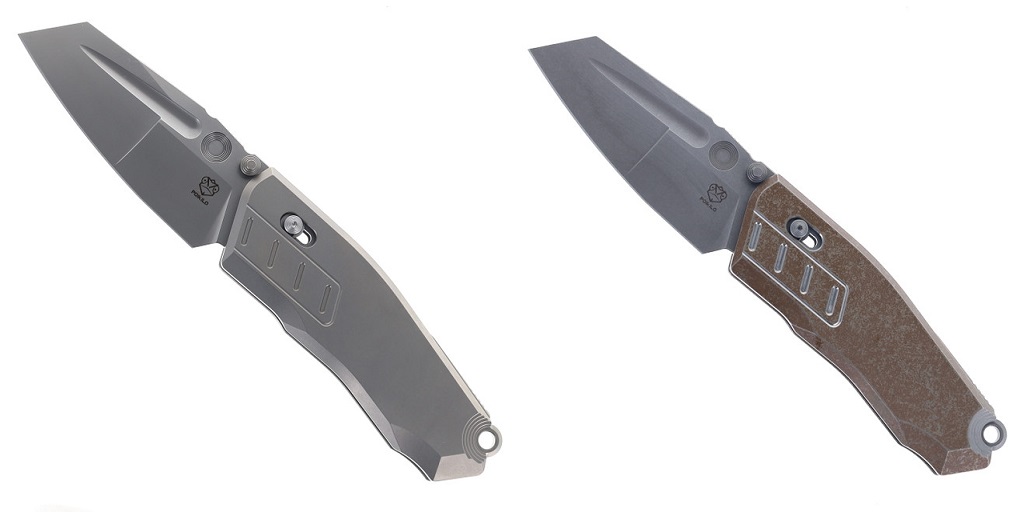
In the market for a new folding utility knife but want to learn more about the lock types before you buy one? Let this be your guide.
Liner Locks
In a liner lock, there is a spring bar that’s a part of the liner that swings inward and wedges under the blade, holding it open.
Pros:
- Liner locks are cheap to produce, and very common.
- They can be opened and closed with one hand.
- They’re convenient to use and fairly intuitive.
Cons:
- They’re not the strongest lock type.
- They’re inherently right or left-handed.
- They can disengage unintentionally if you twist the knife
- You need to put your fingers in the path of the blade when closing.
Frame Locks
A frame lock is identical in operation to a liner lock except that it is a portion of the frame that swings inward under the blade to lock it open.
Pros:
- Frame locks are a little stronger than liner locks.
- They can be opened and closed with one hand.
- They’re relatively convenient and intuitive, like liner locks.
Cons:
- They’re inherently right or left-handed.
- You need to put your fingers in the blade’s path when disengaging.
Lock Backs
In a lock back, a spring bar within the knife wedges against the bottom of the blade to hold it open. To close it, you need to compress another bar at the rear of the knife.
Pros:
- Lock backs are a time-tested design and relatively affordable to produce.
- You don’t need to put your fingers in the blade’s path at any point.
- They’re stronger than most liner and frame locks.
Cons:
- You need two hands to close a lock back, even though you can open one with one hand.
- They’re not the most ergonomic or intuitive.
Button Locks
While the internal mechanism of a button lock may vary, externally, the lock is either engaged or disengaged via a plunger or “button.”
Pros:
- Button locks can be very strong.
- They are highly fidget friendly and easy to use.
- While they can unintentionally disengage, it is not easy for this to happen.
- Some button locks can keep the blade locked closed, not just open.
Cons:
- A button lock can favor a right or left-handed user.
- Button locks keep your fingers out of the blade’s path when closing.
- For users familiar with other lock types, they are not intuitive.
Bar Locks
In a bar lock, a cylindrical bar rides in the frame of the knife, sliding backwards and forwards in a channel and held in place under the tension of a U-shaped spring.
Pros:
- Bar locks are probably the strongest knife lock currently available.
- They don’t favor either right or left handed users.
- There is effectively no chance of unintentional disengagement.
- They can be opened and closed with one hand.
Cons:
They may not be as intuitive to users that are unfamiliar with them.
- Some knives with bar locks are more expensive.
Collar Locks
A collar lock is a ring at the base of the blade that you rotate to wedge the blade either open or closed.
Pros:
- Cheap to manufacture, easy to learn to use.
- They can be removed to render knives compliant with local laws.
- They can lock the blade both open and closed.
- The design is very simple and easy to understand.
Cons:
- Collar locks are not particularly strong and can fail under duress.
- They require two hands to operate.
Here for a New Folding Utility Knife?
Now that you know a bit more about the types of locks with which a folding utility knife is likely to be equipped, you can better choose for yourself. Visit White Mountain Knives and see what’s in store; they carry a wide range of utility knives and pocket knives from the top brands.
For more information about Buck Survival Knife and Good Pocket Knife Brands Please visit: White Mountain Knives, LLC.

 English
 Arabic
 French
 Portuguese
 Deutsch
 Turkish
 Dutch
Dutch
 Italiano
 Russian
 Romaian
 Portuguese (Brazil)
 Greek
Greek