


Construction projects operate in high-risk, high-stakes environments where delays, cost overruns, regulatory challenges, and on-site uncertainties are common. In such conditions, project resilience—the ability to anticipate, adapt, and recover from disruptions—is not optional; it is essential. Two critical pillars that strengthen resilience in construction project management are structured record-keeping and effective communication.
1. Records as the Backbone of Construction Projects
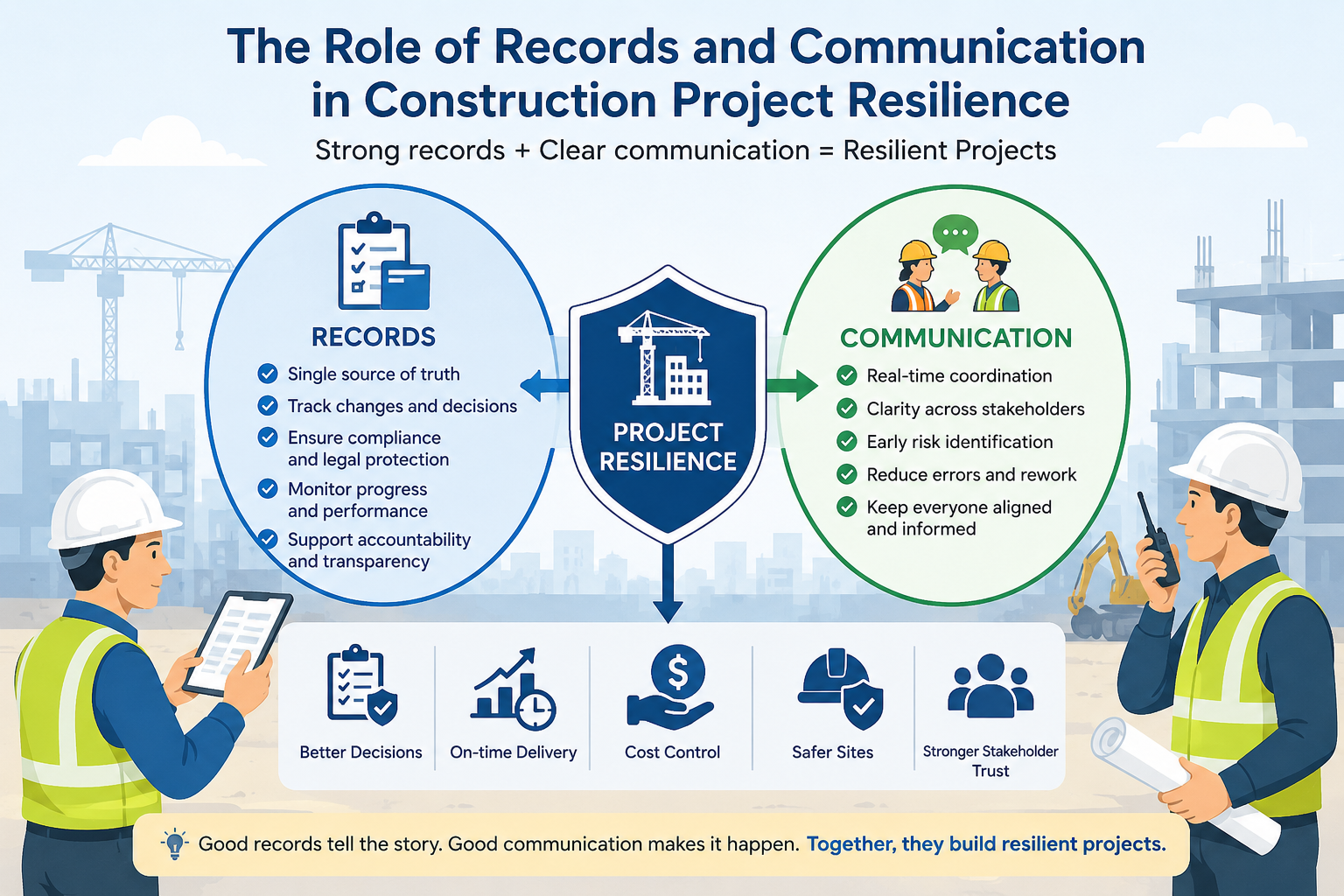
In construction, records serve as the project’s single source of truth. These include contracts, drawings, site instructions, permits, daily logs, safety reports, and change orders.
Ensuring Continuity: With multiple contractors, consultants, and workers involved, well-maintained records ensure smooth transitions even when teams change.
Tracking Changes: Construction projects frequently undergo design and scope changes. Proper documentation helps track revisions and avoid disputes.
Legal Protection: Accurate records are crucial in claims, audits, and compliance with regulatory authorities.
Performance Monitoring: Progress reports and site logs help identify delays early and take corrective action.
Without structured records, construction projects risk misalignment, rework, and costly delays.
2. Communication: The Engine of On-Site Coordination
While records capture information, communication ensures it is understood and acted upon across teams.
Real-Time Coordination: Daily briefings, toolbox talks, and site meetings ensure everyone is aligned on tasks and safety protocols.
Clarity Across Stakeholders: Architects, engineers, contractors, and clients require clear and tailored communication to avoid misunderstandings.
Risk Mitigation: Early communication of risks—such as material shortages or weather disruptions—helps teams respond proactively.
Reducing Errors: Clear instructions minimize rework, saving both time and cost.
In construction, poor communication often leads to delays, safety issues, and budget overruns.
3. Integration of Records and Communication
True resilience emerges when records and communication work together seamlessly.
Informed Decision-Making: Site data, reports, and documentation provide the foundation for meaningful discussions and decisions.
Efficient Issue Resolution: Documented issues combined with quick communication enable faster problem-solving.
Accountability: Recorded decisions and communicated responsibilities ensure clarity and ownership across teams.
For example, a documented site issue becomes actionable only when communicated promptly to the relevant team for resolution.
4. Role of Technology in Modern Construction Projects
Digital tools have transformed how construction teams manage records and communication.
Centralized Platforms: Cloud-based systems store drawings, reports, and updates in one accessible location.
Real-Time Updates: Mobile apps allow site teams to upload progress, photos, and issues instantly.
Collaboration Tools: Integrated communication platforms bridge gaps between on-site and off-site teams.
However, technology is only effective when supported by clear processes and disciplined usage.
5. Leadership and Culture
Resilience in construction projects is also driven by leadership and organizational culture.
Standardized Processes: Leaders must establish clear protocols for documentation and reporting.
Encouraging Transparency: Open communication ensures issues are reported early rather than hidden.
Training and Accountability: Teams must be trained to maintain records accurately and communicate effectively.
A culture that values documentation and open dialogue significantly reduces project risks.
Conclusion
Organizations aiming to strengthen construction project resilience can benefit from structured systems and expert guidance. Firms like Al Qarar Group specialize in implementing robust record-keeping frameworks and streamlined communication strategies, enabling construction projects to navigate complexity, minimize risk, and achieve long-term success.
https://alqarargroup.com/service/project-management
1. Records as the Backbone of Construction Projects
In construction, records serve as the project’s single source of truth. These include contracts, drawings, site instructions, permits, daily logs, safety reports, and change orders.
Ensuring Continuity: With multiple contractors, consultants, and workers involved, well-maintained records ensure smooth transitions even when teams change.
Tracking Changes: Construction projects frequently undergo design and scope changes. Proper documentation helps track revisions and avoid disputes.
Legal Protection: Accurate records are crucial in claims, audits, and compliance with regulatory authorities.
Performance Monitoring: Progress reports and site logs help identify delays early and take corrective action.
Without structured records, construction projects risk misalignment, rework, and costly delays.
2. Communication: The Engine of On-Site Coordination
While records capture information, communication ensures it is understood and acted upon across teams.
Real-Time Coordination: Daily briefings, toolbox talks, and site meetings ensure everyone is aligned on tasks and safety protocols.
Clarity Across Stakeholders: Architects, engineers, contractors, and clients require clear and tailored communication to avoid misunderstandings.
Risk Mitigation: Early communication of risks—such as material shortages or weather disruptions—helps teams respond proactively.
Reducing Errors: Clear instructions minimize rework, saving both time and cost.
In construction, poor communication often leads to delays, safety issues, and budget overruns.
3. Integration of Records and Communication
True resilience emerges when records and communication work together seamlessly.
Informed Decision-Making: Site data, reports, and documentation provide the foundation for meaningful discussions and decisions.
Efficient Issue Resolution: Documented issues combined with quick communication enable faster problem-solving.
Accountability: Recorded decisions and communicated responsibilities ensure clarity and ownership across teams.
For example, a documented site issue becomes actionable only when communicated promptly to the relevant team for resolution.
4. Role of Technology in Modern Construction Projects
Digital tools have transformed how construction teams manage records and communication.
Centralized Platforms: Cloud-based systems store drawings, reports, and updates in one accessible location.
Real-Time Updates: Mobile apps allow site teams to upload progress, photos, and issues instantly.
Collaboration Tools: Integrated communication platforms bridge gaps between on-site and off-site teams.
However, technology is only effective when supported by clear processes and disciplined usage.
5. Leadership and Culture
Resilience in construction projects is also driven by leadership and organizational culture.
Standardized Processes: Leaders must establish clear protocols for documentation and reporting.
Encouraging Transparency: Open communication ensures issues are reported early rather than hidden.
Training and Accountability: Teams must be trained to maintain records accurately and communicate effectively.
A culture that values documentation and open dialogue significantly reduces project risks.
Conclusion
Organizations aiming to strengthen construction project resilience can benefit from structured systems and expert guidance. Firms like Al Qarar Group specialize in implementing robust record-keeping frameworks and streamlined communication strategies, enabling construction projects to navigate complexity, minimize risk, and achieve long-term success.
https://alqarargroup.com/service/project-management
Construction projects operate in high-risk, high-stakes environments where delays, cost overruns, regulatory challenges, and on-site uncertainties are common. In such conditions, project resilience—the ability to anticipate, adapt, and recover from disruptions—is not optional; it is essential. Two critical pillars that strengthen resilience in construction project management are structured record-keeping and effective communication.
1. Records as the Backbone of Construction Projects
In construction, records serve as the project’s single source of truth. These include contracts, drawings, site instructions, permits, daily logs, safety reports, and change orders.
Ensuring Continuity: With multiple contractors, consultants, and workers involved, well-maintained records ensure smooth transitions even when teams change.
Tracking Changes: Construction projects frequently undergo design and scope changes. Proper documentation helps track revisions and avoid disputes.
Legal Protection: Accurate records are crucial in claims, audits, and compliance with regulatory authorities.
Performance Monitoring: Progress reports and site logs help identify delays early and take corrective action.
Without structured records, construction projects risk misalignment, rework, and costly delays.
2. Communication: The Engine of On-Site Coordination
While records capture information, communication ensures it is understood and acted upon across teams.
Real-Time Coordination: Daily briefings, toolbox talks, and site meetings ensure everyone is aligned on tasks and safety protocols.
Clarity Across Stakeholders: Architects, engineers, contractors, and clients require clear and tailored communication to avoid misunderstandings.
Risk Mitigation: Early communication of risks—such as material shortages or weather disruptions—helps teams respond proactively.
Reducing Errors: Clear instructions minimize rework, saving both time and cost.
In construction, poor communication often leads to delays, safety issues, and budget overruns.
3. Integration of Records and Communication
True resilience emerges when records and communication work together seamlessly.
Informed Decision-Making: Site data, reports, and documentation provide the foundation for meaningful discussions and decisions.
Efficient Issue Resolution: Documented issues combined with quick communication enable faster problem-solving.
Accountability: Recorded decisions and communicated responsibilities ensure clarity and ownership across teams.
For example, a documented site issue becomes actionable only when communicated promptly to the relevant team for resolution.
4. Role of Technology in Modern Construction Projects
Digital tools have transformed how construction teams manage records and communication.
Centralized Platforms: Cloud-based systems store drawings, reports, and updates in one accessible location.
Real-Time Updates: Mobile apps allow site teams to upload progress, photos, and issues instantly.
Collaboration Tools: Integrated communication platforms bridge gaps between on-site and off-site teams.
However, technology is only effective when supported by clear processes and disciplined usage.
5. Leadership and Culture
Resilience in construction projects is also driven by leadership and organizational culture.
Standardized Processes: Leaders must establish clear protocols for documentation and reporting.
Encouraging Transparency: Open communication ensures issues are reported early rather than hidden.
Training and Accountability: Teams must be trained to maintain records accurately and communicate effectively.
A culture that values documentation and open dialogue significantly reduces project risks.
Conclusion
Organizations aiming to strengthen construction project resilience can benefit from structured systems and expert guidance. Firms like Al Qarar Group specialize in implementing robust record-keeping frameworks and streamlined communication strategies, enabling construction projects to navigate complexity, minimize risk, and achieve long-term success.
https://alqarargroup.com/service/project-management
0 Комментарии
0 Поделились
924 Просмотры
0 предпросмотр

 English
 Arabic
 French
 Spanish
 Portuguese
 Deutsch
 Turkish
 Dutch
Dutch
 Italiano
 Romaian
 Portuguese (Brazil)
 Greek
Greek